

Mount Fuji Visibility Through the Seasons
- Johnny Row
- Dec 24, 2025
- 3 min read

When it comes to visiting Mt. Fuji, timing is everything. Because the mountain is so tall (3,776 meters), it creates its own weather system. You can have a perfectly sunny day in Tokyo and find Mt. Fuji completely hidden behind a "cloud skirt."
Here is a seasonal breakdown of what to expect when planning your trip to www.kawaguchikotours.com.
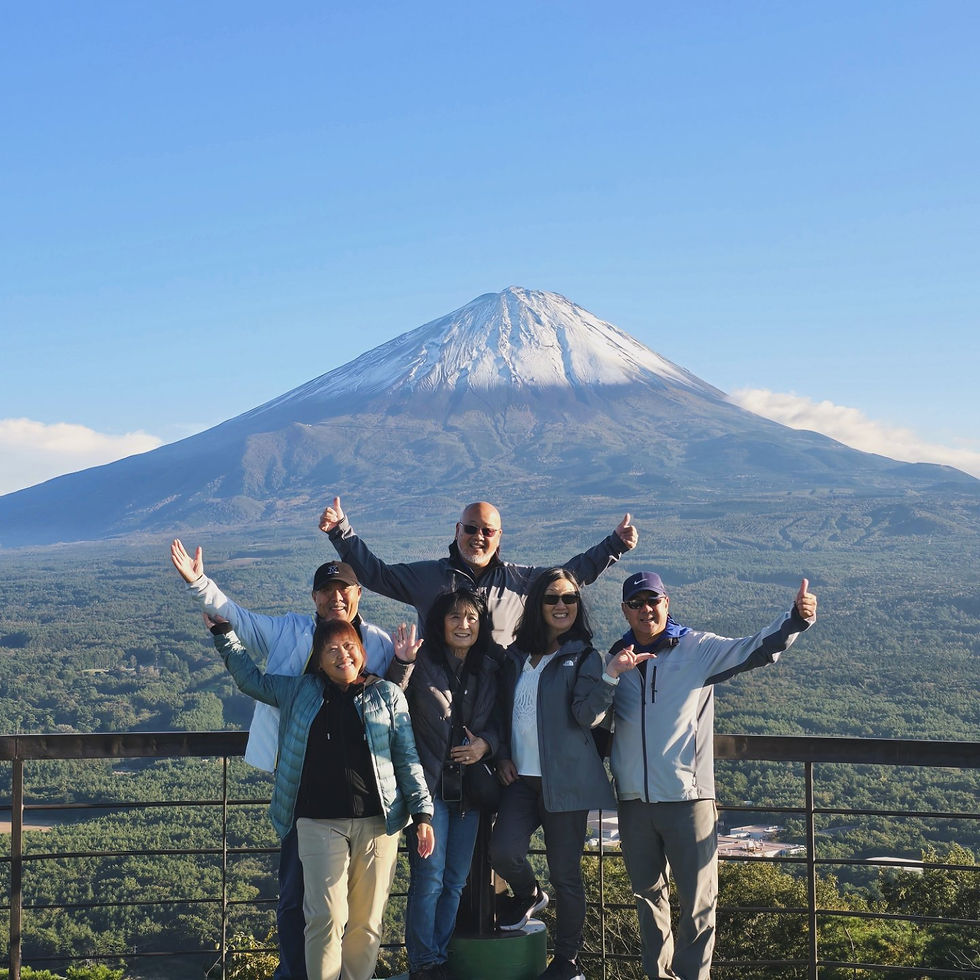
❄️ Winter (December – February): The Best Visibility
If your primary goal is to see the mountain, winter is undoubtedly the best time. The air is dry and crisp, which removes the haze common in warmer months.
The View: This is when you get the "Postcard View"—a brilliant blue sky and a thick, perfectly symmetrical snow cap.
Visibility Success Rate: Over 75-80% in December and January. It is often visible all day long.
Special Event: "Diamond Fuji" occurs during winter, where the setting sun aligns perfectly with the peak, looking like a glowing gem.
Pro Tip: It is cold! Temperatures at Lake Kawaguchiko often drop below freezing, but the clear views from a lakeside onsen (hot spring) are unbeatable.
🌸 Spring (March – May): The Iconic Pairing
Spring is the most popular time for domestic and international tourists because it combines Japan’s two greatest icons: Mt. Fuji and Cherry Blossoms.
The View: The snow cap begins to thin slightly but remains white. In mid-April, the northern shore of Lake Kawaguchiko and the Chureito Pagoda are surrounded by pink Sakura.
Visibility Success Rate: About 40-50%. Spring haze (called kiri) starts to roll in as the humidity rises.
Special Event: The Fuji Shibazakura Festival (Pink Moss) begins in mid-April through May, where fields of pink flowers carpet the ground at the base of the mountain.
Pro Tip: Early morning is vital. By 10:00 AM, clouds often begin to form around the middle of the mountain.
☀️ Summer (June – August): The Climbing Season
Summer is a paradox: it is the only time you can climb to the summit, but it is the hardest time to actually see the mountain from below.
The View: The famous snow cap disappears entirely by July, leaving a "Black Fuji" (dark volcanic rock). In June, the rainy season often hides the mountain for weeks at a time.
Visibility Success Rate: 20-30%. It is very common for Fuji to be "shy" and hide behind thick summer clouds.
Special Event: Official Climbing Season (Early July to Early September). This is the only time the trails and mountain huts are open for hikers.
Pro Tip: If you visit in summer, don't plan your whole trip around one day. Give yourself a 2-3 day window to increase your chances of a clear morning.
🍁 Autumn (September – November): The Photographer's Favorite
As the humidity of summer fades, the air clears up again, and the "Snow Cap" typically returns in October.
The View: Vibrant red maples frame the mountain. The contrast between the fiery orange leaves, the blue lake, and the white-capped peak is spectacular.
Visibility Success Rate: 60-70%. Visibility improves significantly as you move from September (typhoon season) into the stable weather of November.
Special Event: The Kawaguchiko Autumn Leaves Festival (Momiji Corridor) in November. The trees are lit up at night, creating a magical atmosphere.
Pro Tip: November is arguably the best "all-rounder" month—great visibility, beautiful colors, and manageable temperatures.
Monthly Visibility At-A-Glance
Season | Month | Snow Cap? | Best for... |
Winter | Dec - Feb | Yes (Heavy) | Photography & Clear Skies |
Spring | Mar - May | Yes | Cherry Blossoms & Festivals |
Summer | Jun - Aug | No | Climbing & Hiking |
Autumn | Sep - Nov | Yes (starts Oct) | Fall Foliage & Moderate Weather |


Comments